

Elevating Nursing Education: The Impact of the SRF SONAM Initiative
To the visionary SRF SONAM Team: Sara Salim Megahni, Seher Jaffer Ali, Rija Salahudidin, and the esteemed Madam Dr Laila Akbar Ladak.
I express my profound and sincere appreciation for the establishment of the Student Research Forum (SRF). This initiative is more than just a club; it functions as a vital, dynamic learning ecosystem that successfully addresses a critical educational gap for BSN students.
The SRF is an essential platform that has fundamentally transformed my academic journey. It has empowered me to evolve from a passive learner to an active investigator, helping me to build strong research competencies and foundational research literacy necessary for modern healthcare.
Through your structured workshops and practical Quality Improvement (QI) training, the forum has created critical opportunities for applying complex research concepts through real-world projects. This process successfully transforms theoretical knowledge into tangible, impactful action.
In essence, the SRF is truly an invaluable investment in the next generation of nurses. It is preparing nursing students to become confident, evidence-driven practitioners ready to drive meaningful change in healthcare systems. The skills cultivated here are not just for their degrees; they support their lifelong learning and professional growth.
Thank you for diligently cultivating a crucial culture of inquiry, curiosity, and evidence-informed practice within the School of Nursing and Midwifery.
Introduction: Why research skills are essential for BSN students
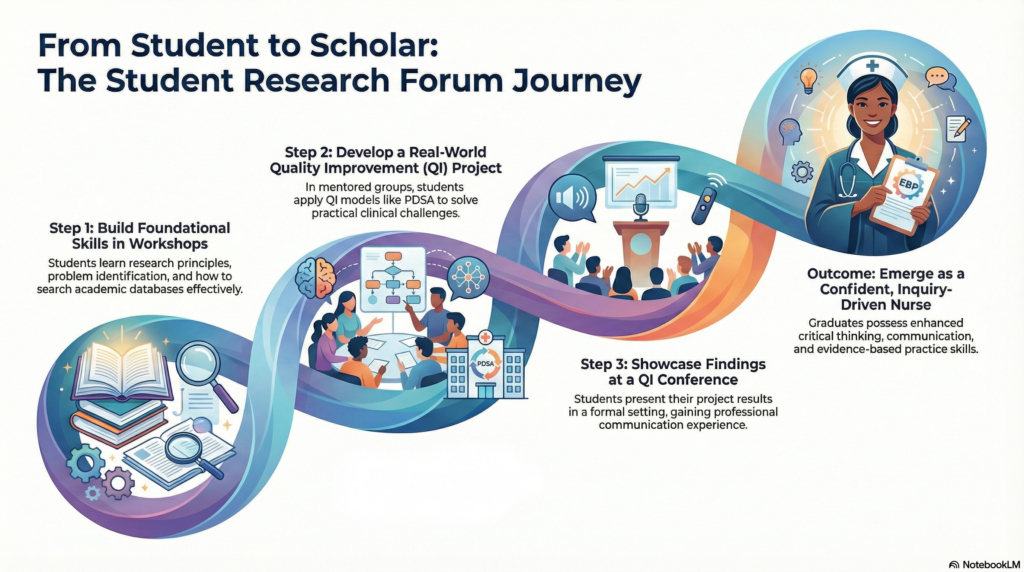
The Student Research Forum is a dynamic learning platform designed to strengthen the research readiness of BSN students. As nursing practice becomes more evidence-driven, undergraduate nurses must develop strong foundational skills in research, inquiry, and quality improvement. This forum provides structured learning experiences that guide students from basic understanding to hands-on project application.
The journey begins with two foundational workshops. The Introduction to Research Workshop helps students understand what research is, how it supports evidence-based nursing, and how to identify research problems. It breaks complex concepts into simple, relatable examples so BSN students can appreciate how research improves patient outcomes and clinical decisions.
The second session, Search Strategies Workshop, teaches students how to navigate academic databases, use keywords, apply Boolean operators, and evaluate credible sources. These skills are essential for writing assignments, developing projects, and understanding scientific evidence.
A major highlight of the forum is the Quality Improvement (QI) Training Series. Students first attend two preparatory workshops focused on QI principles, PDSA cycles, and identifying real problems within clinical or academic settings. With guidance from faculty mentors, students then design their own QI projects, collecting data, proposing small changes, and evaluating the impact of their interventions.
In the traditional view, nurses are compassionate carers. But in today’s rapidly evolving healthcare landscape, they must also be evidence-driven practitioners and critical thinkers. As patient care grows more complex, the demand for nurses who can analyse problems, interpret data, and improve systems has never been higher. An innovative model called the “Student Research Forum” forges a new pathway, guiding students across the bridge from textbook theory to tangible clinical impact. This article explores the three most impactful ways this programme achieves that transformation.
Overall, the Student Research Forum transforms BSN students into confident, evidence-aware practitioners. It not only builds research literacy but also nurtures leadership, critical thinking, and a spirit of continuous improvement – skills essential for the next generation of nursing professionals.
It’s Not About Labs; It’s About Improving Patient Care
A key feature of the Student Research Forum is its focus on Quality Improvement (QI), a practical application of research aimed at enhancing systems and patient outcomes. This approach contrasts sharply with traditional academic research, where the goal is often to generate new knowledge. Instead, QI focuses on creating measurable improvements in efficiency and patient care within a local setting, using small, rapid cycles of change like the Plan-Do-Study-Act (PDSA) model to address immediate problems. This reframing makes research feel accessible and empowers students by showing them it’s a tool they can use to make a meaningful impact right where they are.
Students Don’t Just Study Problems; They Solve Them
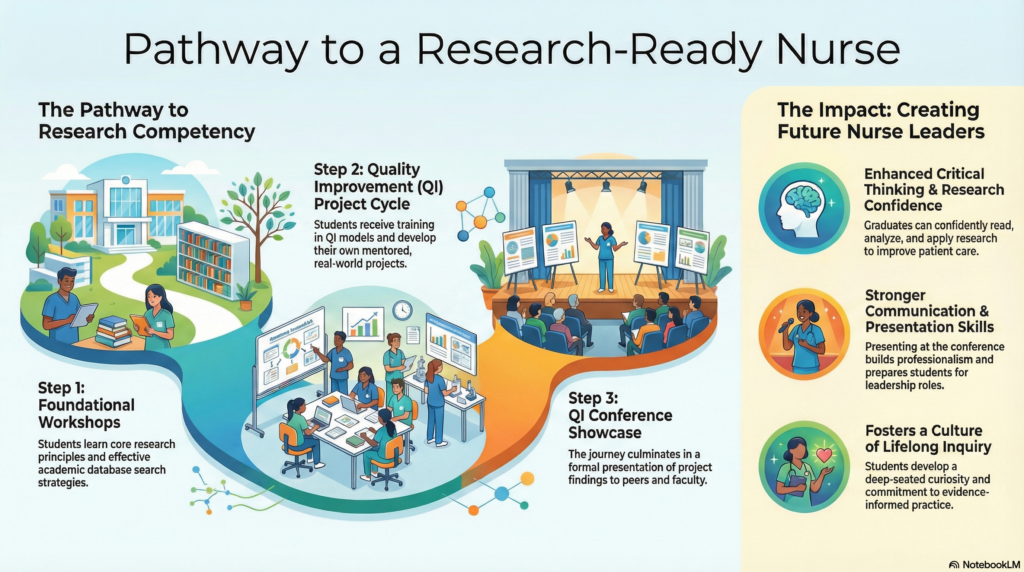
Before students tackle clinical challenges, the programme equips them with a strong academic foundation. It begins with workshops on research principles and essential skills like navigating academic databases such as PubMed and CINAHL. Only after mastering these core competencies do students enter the hands-on project development phase.
Working in small groups, they identify a real-world issue and develop their own QI project to address it. Throughout the process, faculty mentors provide continuous feedback, help refine project objectives, and ensure students adhere to ethical guidelines. Concrete examples of student-led projects include:
- Enhancing patient education during discharge
- Reducing medication errors
- Improving hand hygiene compliance
- Reducing waiting times in outpatient departments
This hands-on work is where students sharpen their critical thinking skills, learning to question existing practices and propose evidence-based solutions. It transforms classroom theory into meaningful, tangible action and demonstrates their own capacity to improve healthcare delivery.
Quality Improvement (QI) Training Series
One of the hallmark features of the Student Research Forum is its focus on Quality Improvement (QI). QI is a practical application of research principles aimed at enhancing systems, patient outcomes, and organisational efficiency. Unlike traditional research, QI projects focus on small, rapid cycles of change to address local problems.
To prepare students for developing their own QI projects, the forum offers two structured preparatory workshops.
Preparatory Workshops
These workshops introduce students to the core elements of QI, including:
- Understanding the meaning and purpose of quality improvement
- Introduction to QI models such as PDSA (Plan–Do–Study–Act) cycles
- Identifying clinical or academic problems that need improvement
- Setting measurable objectives
- Developing interventions and defining indicators
- Collecting and analyzing data in a simple, organized way
Students are also shown real examples of QI projects conducted by previous cohorts or professional nurses, giving them inspiration and practical insight. Facilitators emphasise the importance of teamwork, communication, and critical thinking in designing successful QI initiatives.
It Ends Not with a Test, but with a Professional Showcase
The highlight of the programme is the annual Quality Improvement Conference, a professional platform where students present their work through posters or oral presentations. Their projects are evaluated by faculty reviewers based on specific criteria, including clarity, methodology, and impact, simulating a true academic conference environment.
For many students, this is their first experience presenting scholarly work, an opportunity that directly builds strengthened communication and presentation skills essential for future leadership roles. Most importantly, it reinforces the idea that even as undergraduates, they can be valuable contributors who drive meaningful changes in healthcare.
Impact on Student Learning
The Student Research Forum has a profound impact on BSN students’ academic development and professional identity. The benefits extend far beyond the classroom, influencing their clinical practice, critical thinking abilities, and future career pathways.
Some of the key learning outcomes include:
Enhanced Confidence in Research
Students develop a stronger understanding of research principles, which increases their confidence in reading, analysing, and applying research findings in clinical practice.
Improved Literature Searching Skills
The ability to find high-quality evidence supports academic writing, clinical decision-making, and future research projects.
Development of Critical Thinking
Engaging with real problems encourages students to question existing practices, identify gaps, and propose solutions.
Understanding of Quality Improvement
Students learn how to evaluate healthcare processes and implement small changes to improve outcomes – skills that are highly valued in clinical environments.
Strengthened Communication and Presentation Skills
Presenting at the conference helps students develop professional communication abilities essential for leadership roles.
Early Exposure to Scholarly Culture
The forum instills curiosity, professional responsibility, and a desire for lifelong learning.
Conclusion: Investing in the Next Generation of Healthcare Leaders
The Student Research Forum does more than just teach research methods; it cultivates a culture of inquiry, curiosity, and professional responsibility. By providing structured workshops, practical QI training, and a platform to showcase their work, this model prepares students to be not just competent clinicians but also the future leaders and innovators who will shape the future of patient care.
How could this model of early practical training in problem-solving be applied to other fields?